
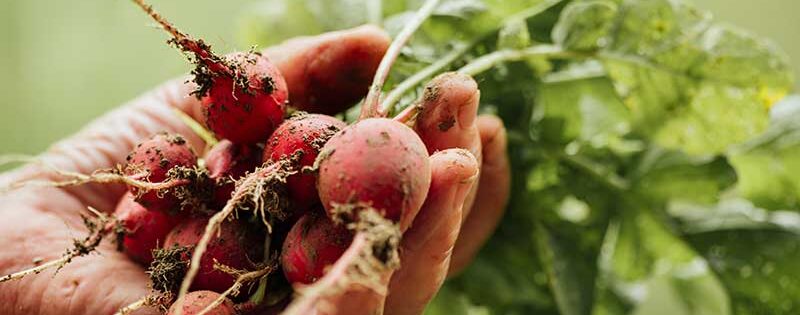
Radishes are crisp, peppery root vegetables that can add freshness without much preparation. Slice them thinly for salads and sandwiches, cut them into wedges for snack plates, or roast them until their flavour becomes milder and slightly sweet. The leafy tops are also edible when fresh. Wash them well and use them in pesto, soup or a quick sauté.
Like many vegetables, radishes contain water and dietary fibre, which can contribute to hydration and normal digestive function as part of the whole diet. They also provide vitamin C. Vitamin C is needed for collagen formation, acts as an antioxidant and helps the body absorb iron from plant foods. The amount in a normal serving is modest, so radishes work best alongside a broad mix of vegetables and fruit.
Choose radishes that feel firm, with smooth skins and fresh-looking leaves. Remove the tops before refrigeration because the leaves draw moisture from the roots. Store the roots in a sealed container and wash them just before use. If their peppery flavour is too strong, soak sliced radish in cold water for ten minutes or combine it with creamy yoghurt, avocado or a mild cheese.
A simple plate might include radish, cucumber, tomato, herbs and lemon. You can also tuck slices into tacos, scatter them over eggs or roast them beside carrots. Their strong colour makes meals visually inviting, which can help encourage children and adults to explore a wider range of vegetables.
References: Australian Government: Healthy Aussie Produce; NIH: Vitamin C fact sheet.